• The Birds of Singapore – an online book

    The Birds of Singapore – an online book

    In May 1943, GC Madoc published “An Introduction to Malayan Birds.” He wrote his manuscript in Singapore’s Changi Prison where he was interned when the country fell into the...

  • Videocam: A powerful tool for studying birds

    Videocam: A powerful tool for studying birds

    1. Collecting birds: In the 19th century the equipment needed to study birds was the gun. Another skill necessary was a good stuffing technique in order to preserve the specimens....

  • Documenting bird calls and songs

    Documenting bird calls and songs

    Many local birdwatchers are able to recognise the birds behind the songs. However, interest in most cases ends there except for a few who make basic recordings. Erik Mobrand...

  • Should attempts be made to tame wild birds?

    Should attempts be made to tame wild birds?

    The first part of the series by aviculturist Lee Chiu San deals with whether birds can be tamed and whether they will remain tamed. The second part looks at whether it is...

  • Postings your observations and images

    Postings your observations and images

    Why should you post your observations and images? Southeast Asian birds are poorly studied in terms of behaviour and ecology. By posting your observations (and this include...

  • Nature Society: The struggle for Singapore’s nature areas

    Nature Society: The struggle for Singapore’s nature areas

    The above paper has just been published. Nature in Singapore is a peer-reviewed, online journal that publishes articles on the flora and fauna (e.g., biology, botany, zoology,...

Saving MacRitchie forest: A youngster’s view

24 May 2013   in Conservation No Comments »
Contributed by Saker Subaraj
Saving MacRitchie forest: A youngster's view The MacRitchie forest is under threat with plans to build a Mass Rapid Transit Line through the Central Catchment Nature Reserve (CCNR), in particular the MacRitchie forest LINK. Within a few months time, soil testing will commence, meaning that the forest will be invaded by heavy machinery that in turn will cause damage to the fragile ecosystem. This patch of forest is the oldest within the CCNR, with some areas as old as the primary forest at Bukit Timah. This is... Read More

© FORAGING BROWN BARBETS OF SE ASIA PART 3

23 May 2013   in Barbet-To'can-H'guide, Feeding-plants No Comments »
Contributed by Daisy O’Neill
© FORAGING BROWN BARBETS OF SE ASIA PART 3 The first part of this series can be found HERE and the second HERE. “What sets Brown Barbets (Calorhamphus fuliginosus) in the genera of Barbets (Megalaiminae) apart from their cousins is that in taxonomic sense, they are free standing, belonging to a class of their own- ‘Calorhamphus’. “Of smaller size as compared to their chunky big cousins, they are brown with no green plumage and also do not have rictal bristles to interestingly aid in catching flying... Read More

Poikilospermum suaveolens and birds

22 May 2013   in Feeding-plants, Sunbirds No Comments »
Contributed by Goh Juanhui
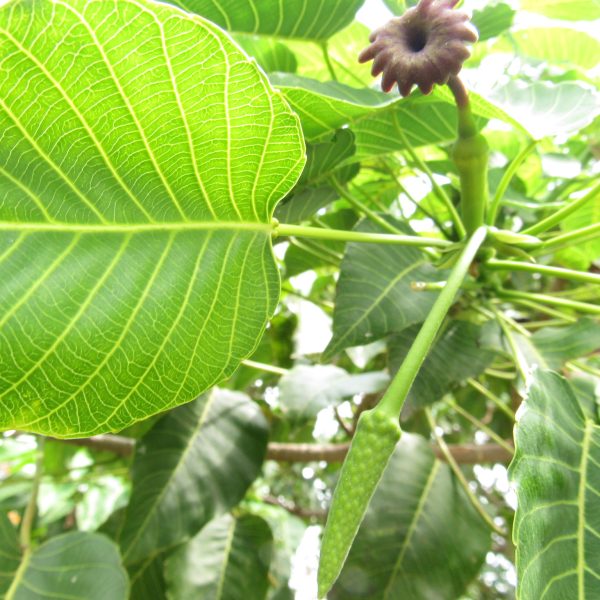
Poikilospermum suaveolens and birds Goh Juanhui was at the Jelutong Tower in Central Catchment Reserve in May 2013 where he was attracted by a flowering epiphytic climber, Poikilospermum suaveolens (Family: Urticaceae). This appears to be the period when this plant is in flowers. There were many birds attracted to the flowers because of their nectar – bulbuls, Crimson Sunbird (Aethopyga siparaja) (above), Orange-bellied Flowerpecker (Dicaeum trigonostigma), and in particular the Greater Green Leafbird... Read More

Ashy Tailorbird – vocalisation…

22 May 2013   in Morphology-Develop., Vocalisation No Comments »
Contributed by Dato’ Dr Amar-Singh HSS
Ashy Tailorbird - vocalisation... On 4th April 2013, Dato’ Dr Amar-Singh HSS visited his favourite birding spot in Tambun Interior, Perak, Malaysia. This is a fish and vegetable farming area among the ex-mining pools and scenic limestone hills around. The area is an excellent spot to view the Ashy Tailorbird (Orthotomus ruficeps cineraceus). A number of pairs were around, some just starting breeding process, others feeding fledged juveniles. The adults were in full breeding plumage (above: adult male)... Read More

Cormorant Fishing – Guangxi, China

21 May 2013   in Interspecific No Comments »
Contributed by KF Yap
Cormorant Fishing – Guangxi, China “I read with interest, sometime ago, a BESG posting on this ancient method of fishing, a traditional practice used in China and Japan LINK. The technique of cormorant fishing goes back as far as 960 AD. “The bird species used are: Great Cormorant Phalacrocorax carbo in China and P. capillatus in Japan. “Today, this old fishing method is used not only to attract tourists but also, in the more remote villages in China, as a simple and effective way of... Read More

Blue-rumped Parrot eats starfruit (Averrhoa carambola)

20 May 2013   in Feeding-plants, Videography 2 Comments »
Contributed by Ong Ei Leen, Jeremiah Loei & Lena Chow
Ong Ei Leen was the first to post the Blue-rumped Parrot (Psittinus cyanurus) eating the starfruit (Averrhoa carambola) at Singapore’s Venus Loop by Lower Peirce Reservoir in mid-May 2013. This rare resident is a wasteful eater, scattering bits and pieces of the fruit on the ground below in his effort to get at the seeds. This male’s eating behaviour (above) is very much like that of the Tanimbar Corella (Cacatua goffini) LINK. While the Tanimbar Corella removes... Read More

Bukit Brown and Bidadari do not a Global Eco-city make

20 May 2013   in Conservation 2 Comments »
Contributed by YC Wee
Bukit Brown and Bidadari do not a Global Eco-city make The opinion piece by Dr Ho Hua Chew in The Straits Times of 1st May 2013 LINK made some wild allegations that were rebutted in my letter published in the same daily of 8th May Now that Dr Ho has replied to my rebuttal LINK, I am posting the controversy so that those interested can can read all three accounts. Dr Ho’s reply highlights the fact that he did not dispute the following: 1. That his definition of forest is flawed. 2. That he has no basis to claim that the... Read More

Nest building by a pair of Black-and-red Broadbills

19 May 2013   in Nesting-failed, Nests No Comments »
Contributed by Lim Seik Ni
Nest building by a pair of Black-and-red Broadbills   Lim Seik Ni of Pontian, in the Malaysian state of Johor, spotted a pair of Black-and-red Broadbills (Cymbirhynchus macrorhynchos) collecting dried leaves in an housing area on 24th April 2013. The nest was located after a 10 minutes search. It was attached to the ends of slender branches, about 3 metres up what looks like a blue mahang (Macaranga heynei) tree. The tree was growing by a busy road. The above images show the tree viewed from the road and from behind the... Read More

AUSTRALASIAN GANNET COLONY

19 May 2013   in Miscellaneous, Videography 1 Comment »
Contributed by Dr. Leong Tzi Ming
AUSTRALASIAN GANNET COLONY “On 11th January 2013, I visited the tip of Farewell Spit, South Island, New Zealand to admire a colony of Australasian Gannets (Morus serrator, Maori name: Takapu) established on a sandy and windy location (above). “There was heavy air traffic at this site, as birds frequently landed and took off, just like a busy international airport (above). “Within this colony, a number of bonded pairs were already prominent. Whenever one partner returns to reunite... Read More

© Discovery: Nest cum Roost Site of Brown Barbets Part 2

18 May 2013   in Barbet-To'can-H'guide, Nesting No Comments »
Contributed by Daisy O’Neill
 © Discovery: Nest cum Roost Site of Brown Barbets Part 2 “While visiting a private durian estate in Peninsula Malaysia, an accidental discovery was made of a tree termitarium over a branch stump cavity about twenty feet above ground in January 2012 (below left). “From this cavity, I noticed movements. Suddenly, small birds no less than four of them were flying out singularly in short intervals. With wheezy sounding calls, they took swift flights and disappeared into a canopy of durian (Durio zibethinus) trees... Read More